
Veneers for stained teeth are a proven cosmetic dentistry solution designed to mask deep, stubborn discolouration that cannot be corrected with traditional whitening treatments. Unlike over-the-counter or in-chair whitening, which relies on bleaching agents to lighten enamel, veneers physically cover the stained surface with a customised, colour-stable layer. Using advanced materials and precision planning, veneers restore brightness, balance, and confidence, often in just a few appointments, making them a practical option for patients seeking immediate and predictable aesthetic results.
For many Australians, tooth staining is not simply a cosmetic inconvenience. Persistent discolouration can subtly impact self-esteem, professional confidence, and even everyday social interactions. People may avoid smiling in photos or feel self-conscious during conversations. Modern veneer technology addresses this concern by offering a reliable, long-lasting solution when other cosmetic methods fall short. Because veneers are tailored to each patient’s facial features and natural tooth tone, the results appear harmonious rather than artificial.
What are veneers for stained teeth?
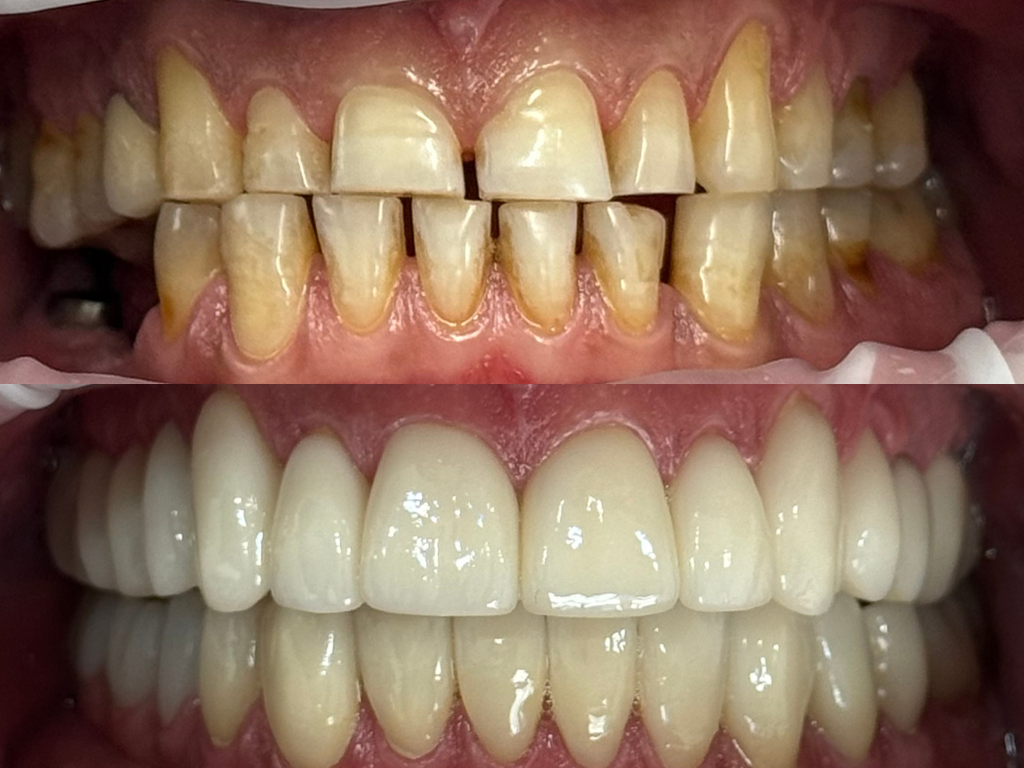
Veneers are ultra-thin shells, most commonly crafted from high-quality porcelain, that are bonded to the front surface of teeth. Their primary purpose is to permanently improve colour, shape, and overall smile harmony while preserving as much natural tooth structure as possible. Each veneer is custom-designed to match surrounding teeth, ensuring a seamless and natural-looking finish.
Unlike whitening products that work only on surface stains, veneers for stained teeth are specifically designed to cover intrinsic discolouration, which lies beneath the enamel. This makes them particularly effective for stains that are resistant to bleaching, providing a consistent shade that does not fade over time with normal eating and drinking habits.
Common causes of deep tooth staining
Deep or intrinsic tooth staining often develops gradually and cannot be reversed through standard oral hygiene or whitening treatments. Common contributing factors include:
- Long-term coffee, tea, or red wine consumption
- Certain antibiotics (such as tetracycline)
- Excess fluoride exposure during childhood
- Tooth trauma or nerve damage
- Natural ageing and enamel thinning
When these factors are present, veneers become one of the most effective cosmetic options available. By masking the underlying discolouration entirely, veneers for stained teeth provide a stable, aesthetically pleasing solution that helps restore a naturally bright smile with long-term confidence.
Why veneers are preferred over whitening for severe stains
Teeth whitening relies on bleaching agents penetrating enamel to break down stain molecules. While this approach can be effective for surface-level discolouration, its ability is limited when stains have penetrated deeper into the tooth structure. In cases of intrinsic staining, results often appear uneven, short-lived, or fail to reach the desired level of brightness.
This is where Veneers for stained teeth provide a more predictable outcome. Instead of attempting to alter the internal colour of the tooth, veneers create a new, colour-stable outer surface. This allows dentists to precisely control shade, opacity, and brightness, something whitening simply cannot achieve for severe or long-standing stains.
Veneers offer:
- Complete colour control, even for deeply embedded discolouration
- Long-term stain resistance, maintaining brightness despite dietary habits
- Immediate, visible transformation without repeated treatments
Pro tip: If multiple whitening treatments have failed, veneers are often the next logical step, offering a solution that is both cosmetic and confidence-restoring.
Types of veneers used for stained teeth
Selecting the right veneer material plays an important role in achieving natural, durable results. Different veneer types suit different levels of staining, budgets, and long-term expectations.
Porcelain veneers (premium option)
Porcelain veneers are widely regarded as the gold standard in Australia for managing severe discolouration. Their strength, colour stability, and lifelike appearance make them especially suitable for patients seeking a long-term aesthetic solution.
Key benefits:
- Exceptional stain resistance, ideal for patients with deep or recurring stains
- Natural translucency that closely mimics real enamel
- High durability (10–15+ years) with proper care
For patients prioritising longevity and aesthetics, porcelain Veneers for stained teeth often deliver the most reliable and natural-looking outcome.
Composite veneers (alternative option)
Composite veneers may suit mild to moderate staining or patients seeking a more affordable solution. They are applied directly to the teeth and can often be completed in a single visit.
While composite veneers can improve colour and shape, they are generally more prone to staining over time and may require maintenance or replacement sooner than porcelain options. They remain a practical choice for those looking for cosmetic improvement with lower upfront cost.
| Feature | Porcelain Veneers | Composite Veneers |
|---|---|---|
| Appearance | Highly natural | Natural |
| Stain Resistance | Excellent | Moderate |
| Longevity | 10–15 years | 5–7 years |
| Cost (AU) | Higher | Lower |
Who is a good candidate for veneers for stained teeth?
You may be suitable if you:
- Have deep or uneven tooth discolouration that does not respond to whitening
- Want a long-term cosmetic solution rather than repeated treatments
- Maintain good oral hygiene habits
- Have healthy gums and sufficient enamel to support veneers
Ideal candidates understand that Veneers for stained teeth are not just a cosmetic enhancement, but a restorative solution that works best when oral health foundations are strong. Patients with untreated gum disease or decay may require preliminary care before veneer placement.
Before proceeding, a comprehensive dental assessment is essential. This evaluation ensures veneers are both safe and appropriate for your smile goals. Many patients begin by learning about a clinic’s overall philosophy and approach to patient care at Bay Central Dental, where cosmetic treatments are planned alongside long-term oral health rather than treated as standalone procedures.
Step-by-step process: how veneers are placed
Initial consultation and digital assessment
The process begins with a detailed consultation focused on understanding your concerns, expectations, and lifestyle. Digital smile analysis, shade matching, and facial proportion assessment help guide treatment planning. This step ensures the final result looks natural rather than overly bright or artificial, especially important when addressing severe staining.
Minimal tooth preparation
To create space for the veneers, a very thin layer of enamel is carefully reshaped. This step allows the veneers to sit flush with surrounding teeth, preventing a bulky appearance. For many patients, preparation is conservative and preserves as much natural tooth structure as possible.
Custom veneer fabrication
Based on precise impressions and digital designs, veneers are custom-crafted to match facial symmetry, bite alignment, and natural tooth contours. This level of customisation is what makes veneers for stained teeth such a reliable solution, as colour, opacity, and translucency are all tailored to mask deep discolouration effectively.
Bonding and final polishing
Once ready, veneers are permanently bonded to the teeth using advanced dental adhesives. Final adjustments and polishing refine the bite, comfort, and aesthetics, ensuring the veneers feel natural and function seamlessly during daily activities like eating and speaking.
Most veneer treatments are completed in two to three visits, making them a convenient solution for busy lifestyles while still delivering precise, long-lasting cosmetic results.
Australian insights: demand for veneers is rising
Recent industry data indicates:
- Over 60% of cosmetic veneer cases in Australia involve discolouration rather than alignment issues
- Porcelain veneers have one of the highest patient satisfaction rates in cosmetic dentistry
- Demand has increased as patients seek minimally invasive, long-lasting solutions
Professional bodies such as the Australian Dental Association recognise veneers as an appropriate treatment for intrinsic staining when conservative measures are no longer effective.
Why expertise matters in veneer treatment
Veneers are not just cosmetic covers placed on the surface of teeth. They function as part of a complex oral system and directly interact with:
- Bite function and jaw alignment
- Speech patterns and phonetics
- Long-term enamel health and tooth stability
Because veneers become a permanent part of your smile, precision in planning and placement is essential. Poorly designed veneers can affect how teeth meet, alter speech clarity, or place unnecessary stress on the underlying enamel. This is why Veneers for stained teeth require more than technical skill, they demand aesthetic judgement, anatomical understanding, and long-term planning.
Clinics that specialise in aesthetic dentistry, digital smile design, and conservative preparation consistently achieve more natural and durable outcomes. These practices focus on preserving tooth structure while ensuring veneers integrate seamlessly with facial proportions and natural movement. Patients exploring treatment options often review dedicated service information about porcelain veneers to understand materials, longevity, and suitability in greater detail before committing to treatment.
Conclusion: choosing veneers for stained teeth with confidence
Veneers for stained teeth offer one of the most reliable and aesthetically pleasing solutions for deep discolouration, especially when whitening and other cosmetic options have proven ineffective. When designed with precision and placed by experienced professionals, veneers restore not only tooth colour but also overall confidence, facial balance, and smile harmony.
If you’re ready to explore a personalised, Australian-standard approach to cosmetic dentistry, start by connecting with Bay Central Dental, where expertise in porcelain veneers is combined with patient-centred care and long-term oral health planning. Every treatment is guided by both aesthetic goals and the health of your natural teeth.
Your brighter, more confident smile begins with the right information, and the right team.
FAQs (Frequently Asked Questions)
Do veneers permanently fix tooth stains?
Yes. Veneers mask discolouration and do not respond to staining the way natural enamel does.
Can veneers look too white or fake?
When properly planned, veneers are colour-matched to facial tone and surrounding teeth for a natural result.
Is the procedure painful?
Most patients experience minimal discomfort thanks to modern techniques.
How long do veneers last?
Porcelain veneers typically last 10–15 years or longer with proper care.
Can I eat normally after getting veneers?
Yes. Once bonded, veneers function like natural teeth.