
Braces for teens are one of the most common and effective ways to correct alignment issues during the teenage years, when the teeth and jaw are still developing.
This stage is often considered ideal for orthodontic treatment because the mouth is more responsive to movement, allowing for efficient and predictable results. Whether it’s correcting crowding, spacing, or bite issues, braces can help guide teeth into a healthier position while supporting long-term oral health.
For many families, starting braces during the teen years is both a practical and proactive decision.
Why the Teenage Years Are Ideal for Braces

Orthodontic treatment is often recommended during adolescence for a reason.
Braces for teens are effective because:
- The jaw is still growing and adaptable
- Teeth respond more quickly to movement
- Alignment issues can be corrected earlier
- Long-term complications may be prevented
Many orthodontic concerns become easier to manage when addressed at the right stage of development.
Pro Tip: Early intervention can sometimes reduce the need for more complex treatment later on.
What to Expect When Getting Braces as a Teen
Starting braces can feel like a big step, but understanding the process makes it more manageable.
The Braces Journey for Teens
1. Initial Consultation
Assessment of teeth, bite, and growth stage.
2. Braces Placement
Brackets and wires are fitted to begin alignment.
3. Adjustment Phase
Regular visits to guide tooth movement.
4. Final Alignment
Fine-tuning for a balanced, functional smile.
5. Retention Phase
Wearing retainers to maintain results.
If you’re wondering about how long treatment typically lasts, you can explore how long do braces take for a detailed breakdown of timelines.
Types of Braces Available for Teens
There are several options available, depending on preferences and needs.
| Type of Braces | Visibility | Best For |
|---|---|---|
| Metal Braces | Visible | Most common and effective |
| Ceramic Braces | Less noticeable | Aesthetic preference |
| Clear Aligners | Nearly invisible | Mild to moderate cases |
Each option offers different benefits, and the right choice depends on the individual case.
Common Orthodontic Issues in Teens
Braces for teens are often used to address a range of alignment concerns.
Typical Conditions
- Crowded teeth
- Gaps between teeth
- Overbite or underbite
- Crossbite
- Jaw alignment issues
Treating these concerns early can improve both function and appearance.
Realistic Expectations: Timeline and Adjustment
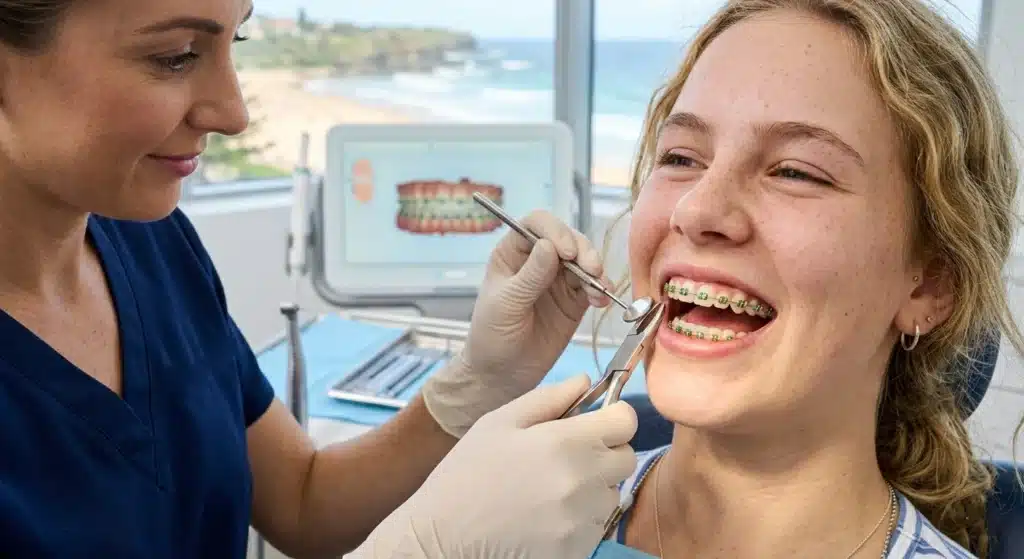
Every teen’s orthodontic journey is slightly different.
What to Expect
- Mild discomfort during the first few days
- Gradual tooth movement over time
- Regular adjustments throughout treatment
Average Timeline
- Most treatments range between 12 to 24 months
Consistency with appointments and care plays a big role in staying on track.
Supporting Teens Through Braces Treatment
Adapting to braces takes time, but simple habits can help.
Daily Care
- Brush thoroughly around brackets
- Use flossing tools designed for braces
Eating Habits
- Avoid hard or sticky foods
- Choose softer options when adjusting
Lifestyle Tips
- Wear elastics as instructed
- Attend all appointments
Support from parents and good routines can make the experience much smoother.
Why Braces for Teens Can Make a Long-Term Difference
Orthodontic treatment during the teenage years offers benefits beyond aesthetics.
Braces can help:
- Improve bite function
- Make cleaning teeth easier
- Reduce risk of future dental issues
- Boost confidence during important developmental years
The goal is not just straighter teeth, but a healthier and more balanced smile.
Maintenance During and After Treatment
Keeping up with care ensures the best possible results.
During Treatment
- Maintain consistent oral hygiene
- Follow dietary recommendations
After Braces
- Wear retainers as advised
- Attend regular dental check-ups
Pro Tip: Retainers are essential to maintaining the results achieved with braces.
Conclusion: Making the Right Choice for Braces for Teens
Braces for teens offer an effective way to guide teeth into proper alignment during an important stage of development. With the right approach, treatment can deliver long-term benefits for both oral health and confidence.
If you’re considering orthodontic treatment, you can visit our website at baycentraldental.com.au to explore your options. At Bay Central Dental, we provide personalised braces treatments designed to suit each teen’s needs, helping create healthy, confident smiles with care that’s tailored every step of the way.
FAQs (Frequently Asked Questions)
What age is best for braces for teens?
Most teens start between ages 12 and 16, when permanent teeth are in place.
Do braces hurt for teens?
There may be mild discomfort initially, but it usually settles within a few days.
How long do teens need to wear braces?
Typically between 12 to 24 months, depending on the case.
Can teens still play sports with braces?
Yes, but wearing a mouthguard is recommended for protection.
Are clear aligners suitable for teens?
They can be suitable for mild to moderate cases, depending on discipline and consistency.