
Cosmetic veneers in Sutherland Shire represent a modern approach to smile precision, one that blends dental science, facial aesthetics, and personalised planning into a single, refined treatment. Rather than chasing overly white or artificial-looking smiles, today’s veneers focus on proportion, harmony, and subtle enhancement that fits naturally with your facial features.
Across Southern Sydney, more patients are choosing cosmetic veneers not just to “fix” teeth, but to refine their overall appearance in a way that feels effortless and authentic. This shift reflects a growing awareness that smile design should complement the whole face, not dominate it, making cosmetic veneers in Sutherland Shire a popular choice for patients seeking refined, long-term results.
What Are Cosmetic Veneers, Really?
Cosmetic veneers are ultra-thin shells, typically crafted from porcelain or advanced composite materials, that are bonded to the front surface of teeth. Their purpose is not to replace teeth, but to enhance what is already there, improving shape, colour, alignment, and balance.
Unlike older cosmetic approaches, modern veneers are designed to be:
- Minimally invasive
- Highly customised
- Functionally integrated with your bite
Together, these principles ensure that veneers enhance aesthetics without compromising tooth structure or comfort. A minimally invasive approach preserves natural enamel, while customisation allows each veneer to match the patient’s facial features and smile dynamics. Functional integration ensures the veneers work harmoniously with the bite, supporting everyday activities like speaking and chewing. This holistic design philosophy is central to how cosmetic veneers in Sutherland Shire achieve refined, long-lasting results.
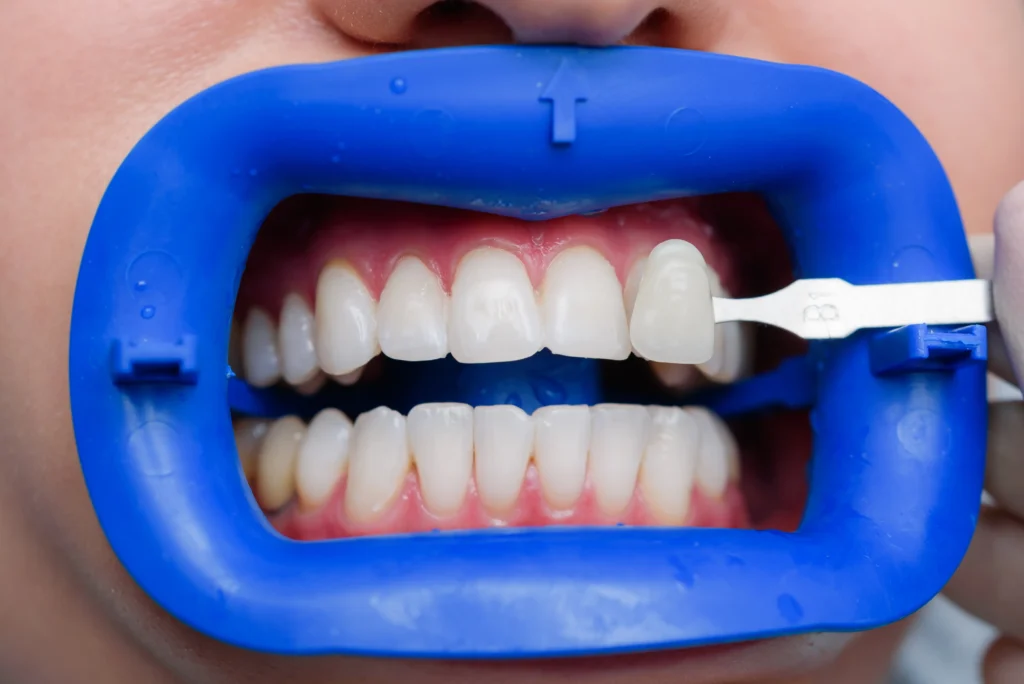
Pro tip: Veneers should never be designed in isolation. Dentists who assess lip movement, facial symmetry, and bite alignment tend to achieve results that age far better over time.
Patients often begin their journey by learning about cosmetic-focused practices such as Bay Central Dental, where aesthetic precision and oral health go hand in hand.
Why Smile Precision Matters More Than Perfection
In cosmetic dentistry, precision matters more than perfection. A technically “perfect” tooth that ignores facial context can look out of place.
Smile precision considers:
- Tooth proportions relative to face shape
- The smile arc and lip dynamics
- Natural translucency and shade layering
- How teeth function during speech and chewing
By evaluating these elements together, dentists can design veneers that feel natural in motion, not just when smiling for a photo. Precision-focused planning ensures teeth complement facial structure, move naturally with the lips, reflect light like real enamel, and perform comfortably during daily use. This approach explains why cosmetic veneers in Sutherland Shire now emphasise digital planning and conservative techniques over aggressive reshaping.
Pro tip: Ask whether your veneer design includes a mock-up or digital preview. Seeing the proposed smile in advance helps ensure the final result aligns with both your facial features and personal expectations.
Who Is a Good Candidate for Cosmetic Veneers?
Cosmetic veneers are suitable for patients who want to address aesthetic concerns while maintaining healthy underlying teeth and gums. In regions such as Southern Sydney, Cosmetic veneers in Sutherland Shire are commonly recommended for patients seeking refined aesthetic improvements without compromising long-term oral health.
From a clinical perspective, ideal candidates are individuals with stable oral health, meaning no active periodontal disease, untreated decay, or severe occlusal dysfunction. Healthy enamel is especially important, as veneers rely on strong adhesive bonding to enamel surfaces for long-term retention and structural stability. This careful patient selection process is a core principle behind predictable outcomes in Cosmetic veneers in Sutherland Shire.
Common reasons patients choose veneers:
- Persistent staining that doesn’t respond to whitening
- Worn or chipped enamel
- Uneven tooth length or shape
- Minor gaps or alignment concerns
These concerns often share a common characteristic: they affect the visible enamel without compromising the tooth’s internal structure. Persistent intrinsic staining, for example, may result from tetracycline exposure or enamel hypomineralisation, which whitening agents cannot adequately correct. Similarly, enamel wear and minor chipping caused by attrition or erosion can be restored conservatively with veneers, re-establishing form and surface integrity without full-coverage crowns.
In cases where alignment is the main issue, some patients explore alternatives such as veneers for crooked teeth as a cosmetic solution when orthodontics may not be necessary. This approach is typically reserved for mild malalignment, where tooth position can be visually corrected through contouring and veneer design rather than physical tooth movement, preserving treatment efficiency while still respecting functional limits.
Types of Cosmetic Veneers Used Today
Porcelain Veneers
Porcelain remains the gold standard due to its strength, stain resistance, and enamel-like translucency, making it a preferred material choice for Cosmetic veneers in Sutherland Shire where long-term aesthetic stability is a priority.
From a materials science standpoint, dental porcelain exhibits high compressive strength and optical properties that closely mimic natural enamel. Its layered translucency allows light transmission and reflection similar to real teeth, which is critical for achieving lifelike results. Porcelain is also chemically stable and non-porous, making it highly resistant to staining from dietary chromogens such as coffee, wine, and tea, an important consideration in the longevity and visual performance of Cosmetic veneers in Sutherland Shire.
Composite Veneers
Composite veneers are sculpted directly onto teeth and may suit patients seeking a faster or more budget-conscious option, particularly in cases where Cosmetic veneers in Sutherland Shire are planned as a conservative or transitional aesthetic solution.
Composite resins consist of a polymer matrix reinforced with inorganic fillers, allowing direct chairside application and immediate aesthetic improvement. While modern composites have improved significantly in strength and polish retention, they remain more susceptible to surface wear and discoloration over time compared to porcelain. However, their reparability and minimal-preparation approach make them suitable in selected cases, especially for younger patients or short-term cosmetic planning within Cosmetic veneers in Sutherland Shire treatment pathways.
| Feature | Porcelain Veneers | Composite Veneers |
|---|---|---|
| Longevity | 10–15+ years | 5–7 years |
| Stain Resistance | Excellent | Moderate |
| Aesthetic Depth | High | Medium |
| Treatment Time | Multiple visits | Often one visit |
This comparison highlights the trade-off between material durability, optical performance, and treatment efficiency. Porcelain veneers offer superior longevity and aesthetic stability due to their material properties, while composite veneers prioritise speed and affordability with some compromise in long-term performance, an important consideration when planning Cosmetic veneers in Sutherland Shire based on individual clinical needs and aesthetic goals.
Pro tip: If longevity and colour stability are priorities, porcelain veneers usually provide better long-term value despite higher upfront costs. Clinically, fewer replacements over time often result in reduced cumulative tooth preparation and better preservation of enamel, an important factor in sustainable cosmetic treatment planning.
The Step-by-Step Veneer Process
1. Comprehensive Consultation
Your dentist evaluates oral health, bite mechanics, and smile goals. At this stage, a comprehensive diagnostic assessment is performed to determine biological, functional, and aesthetic suitability for veneers. This includes periodontal evaluation, caries risk assessment, occlusal analysis, and temporomandibular joint screening. Bite mechanics are assessed to identify parafunctional habits such as bruxism, which can influence veneer material selection and design thickness. In the context of Cosmetic veneers in Sutherland Shire, this consultation phase ensures treatment planning is patient-specific rather than template-driven.
2. Digital Smile Planning
Advanced imaging and measurements guide precise veneer design. Digital smile planning integrates high-resolution intraoral scans, facial photography, and smile analysis software to simulate the final outcome before treatment begins. Measurements such as tooth width-to-length ratios, gingival symmetry, midline alignment, and smile arc curvature are analysed mathematically to optimise aesthetic balance. This data-driven approach reduces subjective guesswork and improves predictability, key factors in achieving precision-based outcomes with cosmetic veneers in Sutherland Shire.
3. Conservative Tooth Preparation
From a biomechanical standpoint, preserving enamel is critical for long-term veneer success, as adhesive bonding to enamel is significantly stronger than to dentine. Conservative preparation typically ranges between 0.3–0.5 mm and follows enamel contours to maintain structural integrity. This minimally invasive approach reduces postoperative sensitivity, enhances bond durability, and supports the biological principles of modern cosmetic dentistry.
4. Custom Veneer Fabrication
Veneers are crafted to match natural enamel texture and translucency. Using the digital plan as a reference, dental laboratories fabricate veneers with layered ceramics that replicate natural enamel’s optical properties. Variations in translucency, opacity, and surface texture are intentionally built into the veneer to mimic light diffusion and reflection seen in natural teeth. Advanced ceramic systems also offer high flexural strength, allowing thin yet durable restorations, an essential characteristic for long-lasting cosmetic veneers in Sutherland Shire.
5. Final Bonding and Review
Veneers are permanently bonded and fine-tuned for comfort and aesthetics. The bonding phase involves meticulous surface preparation of both tooth and veneer, including etching, silanisation, and adhesive resin application. Proper isolation and controlled curing are essential to achieve optimal bond strength and marginal seal. Final occlusal adjustments ensure even force distribution during function, reducing the risk of chipping or debonding. A post-placement review confirms comfort, phonetics, and aesthetic integration with surrounding teeth.
Pro tip: Dentists who test veneers in different lighting conditions often achieve more natural-looking results.
This step accounts for metamerism, where colours can appear different under various light sources, ensuring consistent aesthetics in everyday environments.
How Long Do Cosmetic Veneers Last?
Clinical data from restorative dentistry studies show porcelain veneers have survival rates of over 90% after 10 years when properly planned and maintained, a benchmark often cited when discussing the long-term reliability of Cosmetic veneers in Sutherland Shire.
These outcomes are closely linked to accurate case selection, enamel-preserving preparation, and adhesive protocol quality. Long-term studies indicate that most veneer failures are related to biomechanical overload or bonding issues rather than material fracture itself, highlighting the importance of expert placement and comprehensive treatment planning.
Longevity depends on:
- Oral hygiene habits
- Grinding or clenching
- Diet and staining exposure
- Professional placement quality
Each factor influences veneer integrity differently. Poor hygiene can compromise margins, while bruxism increases mechanical stress. Dietary acids and chromogens affect surface stability, particularly in composite materials. Above all, professional planning and placement remain the strongest predictors of success for cosmetic veneers in Sutherland Shire.
Routine check-ups and protective night guards can significantly extend veneer lifespan by minimising mechanical wear and maintaining optimal oral conditions.
Cosmetic Veneers vs Other Cosmetic Options
| Treatment | Best For | Timeframe | Impact |
|---|---|---|---|
| Veneers | Shape, colour, balance | Weeks | High |
| Whitening | Colour only | Days | Moderate |
| Orthodontics | Alignment | Months–years | Structural |
This comparison highlights the fundamental clinical differences between cosmetic treatment options. Veneers function through an additive restorative approach, allowing dentists to modify tooth shape, colour, and overall balance without altering root position or jaw structure. This enables significant aesthetic improvement within a relatively short timeframe.
For patients wanting to understand how advanced materials and techniques support this approach, modern porcelain veneers offer a clear example of how durability and natural aesthetics can be combined.
Whitening treatments, by contrast, act solely on chromogenic compounds within enamel and dentine and do not address structural or proportional concerns. Orthodontic treatment remains the gold standard for correcting moderate to severe misalignment, but it requires longer treatment periods due to the biological process of tooth movement within bone.
For these reasons, Cosmetic veneers in Sutherland Shire are often selected by patients seeking comprehensive visual improvement without extended treatment timelines. When planned correctly, veneers offer a balanced solution that addresses multiple aesthetic concerns simultaneously while maintaining functional integrity.
Safety, Standards, and Research
Professional organisations such as the Australian Dental Association emphasise that cosmetic veneers are safe when placed by appropriately trained practitioners using conservative, evidence-based techniques.
From a clinical standpoint, veneer safety is closely linked to enamel preservation, accurate case selection, and occlusal assessment. Modern veneer protocols prioritise minimal tooth reduction, ensuring strong enamel bonding and reducing the risk of post-operative sensitivity or restoration failure. Proper evaluation of bite forces and parafunctional habits is also essential to long-term success.
Advances in bonding systems and restorative materials have significantly reduced risks associated with earlier veneer techniques. Contemporary adhesive systems demonstrate improved bond durability and resistance to moisture-related degradation, while modern dental ceramics offer high flexural strength, colour stability, and enamel-like translucency. Long-term clinical studies consistently report high survival rates when veneers are placed following established guidelines, an approach that underpins best-practice delivery of Cosmetic veneers in Sutherland Shire.
Conclusion: A Refined Path to Smile Confidence
Cosmetic veneers in Sutherland Shire reflect a shift toward thoughtful, precision-driven smile design. Rather than dramatic changes, veneers now offer subtle refinement, enhancing confidence while preserving individuality.
From a contemporary clinical perspective, this shift is grounded in minimally invasive dentistry and evidence-based aesthetic principles. Advances in digital planning, adhesive dentistry, and ceramic materials allow clinicians to achieve predictable outcomes while conserving natural tooth structure. By prioritising enamel preservation, facial harmony, and functional stability, modern veneer treatment supports both short-term aesthetic improvement and long-term oral health, an approach that defines the current standard for cosmetic veneers in Sutherland Shire.
If you’re considering a modern, carefully planned smile transformation, the next step is to speak directly with the team at Bay Central Dental, where cosmetic dentistry is guided by precision, experience, and patient-focused care.
A personalised consultation enables comprehensive assessment of oral health, bite dynamics, and aesthetic goals before any irreversible treatment begins. This collaborative planning process ensures that veneer design is tailored not only to visual preferences but also to biological and functional considerations, resulting in a smile that feels natural, performs comfortably, and remains durable over time.
FAQs (Frequently Asked Questions)
Do veneers look fake?
No. Modern veneers are layered to replicate natural enamel translucency. From a restorative dentistry perspective, contemporary veneer fabrication uses stratified ceramic layering to mimic the optical behaviour of natural enamel and dentine. Variations in translucency, opacity, and surface texture allow light to pass through and reflect in a way that closely resembles real teeth. This attention to optical detail is a key reason why Cosmetic veneers in Sutherland Shire are designed to blend seamlessly with surrounding teeth rather than appear overly bright or artificial.
Is the procedure painful?
Most patients experience minimal discomfort during preparation. Clinically, veneer preparation is typically limited to superficial enamel reduction, which contains fewer sensory nerve endings than dentine. When required, local anaesthesia is used to ensure patient comfort throughout the procedure. Post-treatment sensitivity, if present, is usually mild and transient, resolving as the adhesive interface stabilises, reflecting the minimally invasive nature of modern cosmetic veneer protocols.
Can veneers stain?
Porcelain veneers resist stains better than natural enamel. Dental porcelain is non-porous and chemically stable, making it highly resistant to staining from dietary chromogens such as coffee, tea, and red wine. In contrast, natural enamel can absorb pigments over time due to microscopic surface irregularities. This stain resistance contributes significantly to the long-term aesthetic stability associated with Cosmetic veneers in Sutherland Shire, particularly for patients seeking durable colour consistency.
Will veneers affect my speech?
Temporary adjustment may occur, but speech typically normalises quickly. From a phonetic standpoint, veneers can initially alter tongue-to-tooth contact, particularly for sibilant sounds such as “s” and “f.” However, the neuromuscular system adapts rapidly, and speech patterns generally normalise within days. Proper contouring and thickness control during veneer design minimise phonetic disruption.
How many teeth should be treated?
This depends on smile width, facial symmetry, and personal goals. Smile analysis often considers how many teeth are visible during natural speech and smiling, which can range from six to ten teeth depending on lip dynamics and facial proportions. Treating only the teeth within the aesthetic zone ensures harmony and balance without unnecessary intervention. Individualised planning is essential to achieving proportionate, natural-looking results with cosmetic veneer treatment.