
What Is Daily Care for Full Mouth Implants?
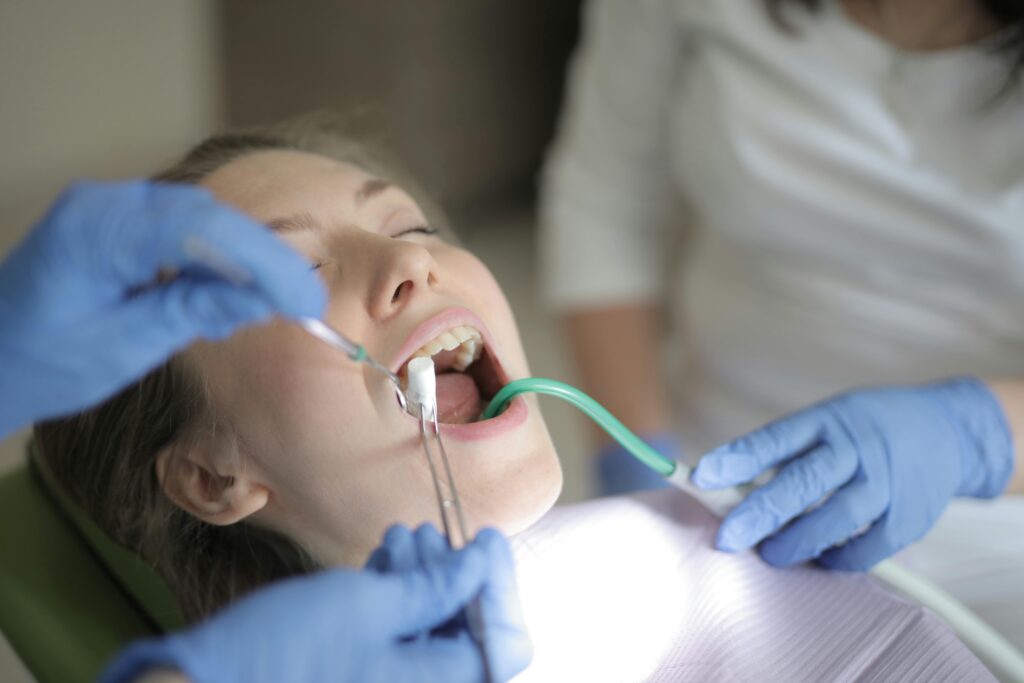
Daily care for full mouth implants refers to the ongoing, at-home and professional routines required to maintain the health, stability, and longevity of a complete implant-supported restoration. Unlike natural teeth, implants don’t decay, but the surrounding gum tissue and bone absolutely can fail if daily care is neglected.
Think of full mouth implants less like “new teeth” and more like a high-performance medical device inside your mouth. They’re designed to last decades, sometimes a lifetime, but only if the daily systems supporting them stay healthy.
In Australia, full mouth implant patients are increasingly younger, more active, and more health-aware. That means daily care for full mouth implants isn’t just about hygiene. it’s about long-term risk management, bite stability, inflammation control, and protecting a serious financial investment.
This guide explores the habits most people aren’t told about and why they matter more than brushing alone.
Why Daily Care for Full Mouth Implants Is Different From Natural Teeth
One of the biggest misconceptions is assuming implant care is easier than caring for natural teeth. In reality, daily care for full mouth implants requires more precision, not less.
Here’s why:
| Natural Teeth | Full Mouth Implants |
|---|---|
| Supported by periodontal ligament | Anchored directly to bone |
| Sensory feedback (pain, pressure) | Reduced sensory warning signs |
| Can move microscopically | Rigid and load-bearing |
| Decay risk | No decay, but high inflammation risk |
Without nerves around implants, inflammation can progress silently. That’s why daily care for full mouth implants must focus on prevention, not reaction.
The Silent Threat: Peri-Implant Disease in Full Mouth Cases
Peri-implant mucositis and peri-implantitis are the implant equivalents of gingivitis and periodontitis, but they progress faster and cause irreversible bone loss.
Australian dental studies report that:
- Up to 43% of implant patients develop peri-implant mucositis
- Around 22% progress to peri-implantitis if daily care is inconsistent
For full mouth restorations, failure isn’t isolated, it’s systemic. One neglected area can compromise the entire arch. That’s why daily care for full mouth implants must be structured, intentional, and repeatable.
A Realistic Daily Care Routine for Full Mouth Implants
Let’s break this into a routine that real people can actually maintain.
Morning Routine (5–7 minutes)
Daily care for full mouth implants starts before breakfast.
- Use a soft-bristle or implant-specific electric toothbrush
- Angle bristles toward the gum-implant junction
- Brush for a full 2 minutes
- Use a low-abrasive, non-whitening toothpaste
Midday Maintenance (2 minutes)
- Rinse with water after meals
- Avoid aggressive mouthwashes containing alcohol
- Sugar-free gum can help stimulate saliva
Night Routine (7–10 minutes)
This is where daily care for full mouth implants truly matters.
Step-by-step:
- Brush thoroughly
- Use implant-safe floss or water flosser
- Clean under bridges or fixed arches
- Apply a non-alcoholic antimicrobial rinse
Tools That Actually Make a Difference (And Ones That Don’t)
Highly Recommended Tools
- Water flossers (clinically shown to reduce peri-implant inflammation)
- Interdental brushes with nylon coating
- Low-abrasive toothpaste (RDA <70)
Tools to Avoid
- Whitening pastes (can damage implant surfaces)
- Hard bristle brushes
- Metal interdental tools
Daily care for full mouth implants isn’t about using more tools. it’s about using the right ones consistently.
Bite Forces, Bruxism, and Why Night Protection Matters
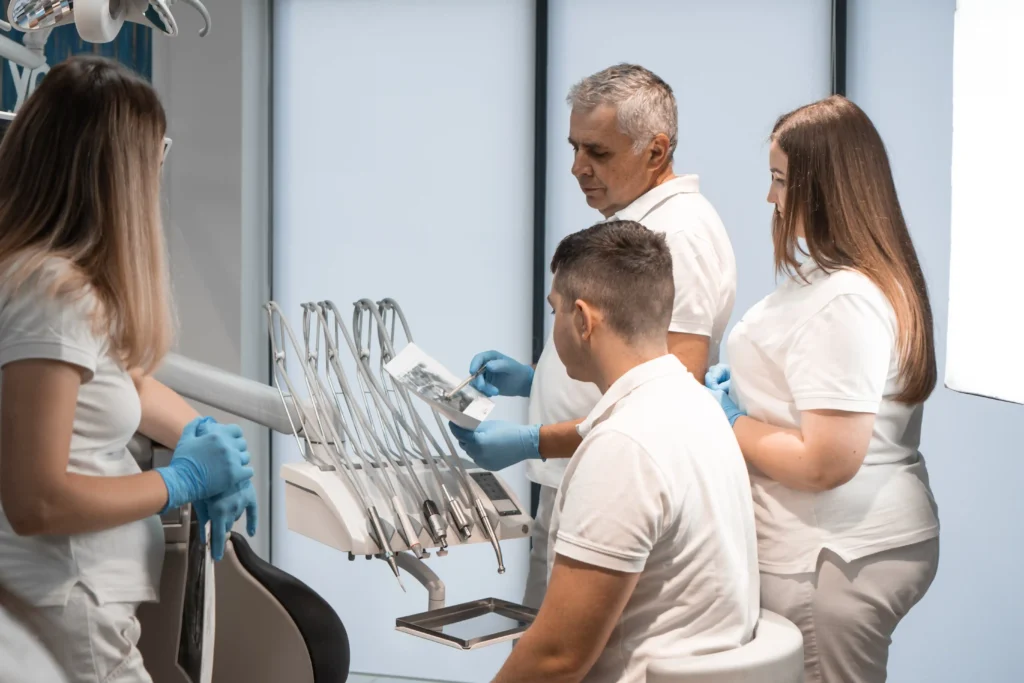
Many full mouth implant failures in Australia aren’t caused by poor hygiene, but by unchecked bite forces.
Implants don’t absorb shock like natural teeth. Night grinding can:
- Loosen screws
- Crack ceramic restorations
- Cause bone fatigue
This is where professional support matters. A custom solution from a Mouth Guards service can dramatically reduce mechanical stress and protect your restoration long-term.
Diet Choices That Quietly Shorten Implant Lifespan
Daily care for full mouth implants also happens at the dinner table.
Foods That Support Implant Health
- Lean proteins
- Omega-3-rich fish
- Crunchy vegetables (stimulate gums)
- Calcium-rich foods
Foods That Increase Risk
- Sticky sugars
- Frequent acidic drinks
- Excessive alcohol
A longitudinal implant study found patients with high sugar frequency had 2.4x higher peri-implant inflammation rates, even with good brushing habits. If you’re wondering how a healthy diet can lengthen dental implants’ lifespan, this article explains how nutrition supports implant stability, gum health, and long-term success.
Professional Maintenance: The Part You Can’t DIY
No amount of daily care for full mouth implants replaces professional oversight.
Recommended Schedule
| Service | Frequency |
|---|---|
| Implant-safe cleaning | Every 3–6 months |
| Full arch assessment | Annually |
| Bite analysis | As needed |
Regular Dental Exams and Cleaning allow clinicians to detect micro-movement, early inflammation, and hygiene blind spots long before failure occurs.
If you’re comparing full-arch and individual restorative options, this resource on tooth replacement in cronulla breaks down treatment pathways that support long-term oral health.
The Psychological Side of Implant Care (Rarely Discussed)
Patients who emotionally disconnect from their implants are statistically more likely to neglect daily care for full mouth implants.
Why?
- “They feel permanent”
- “They don’t hurt”
- “They’re not real teeth”
Successful long-term cases treat implants as living systems, not static objects.
A Simple Case Snapshot (Australian Clinic Data)
Patient Profile:
- Age: 52
- Full upper and lower implants
- No smoking, good general health
Outcome after 7 years:
- Patient A (structured daily care): Zero bone loss
- Patient B (inconsistent care): 2 implant failures, full revision required
Same surgery. Same materials. Only daily care for full mouth implants differed.
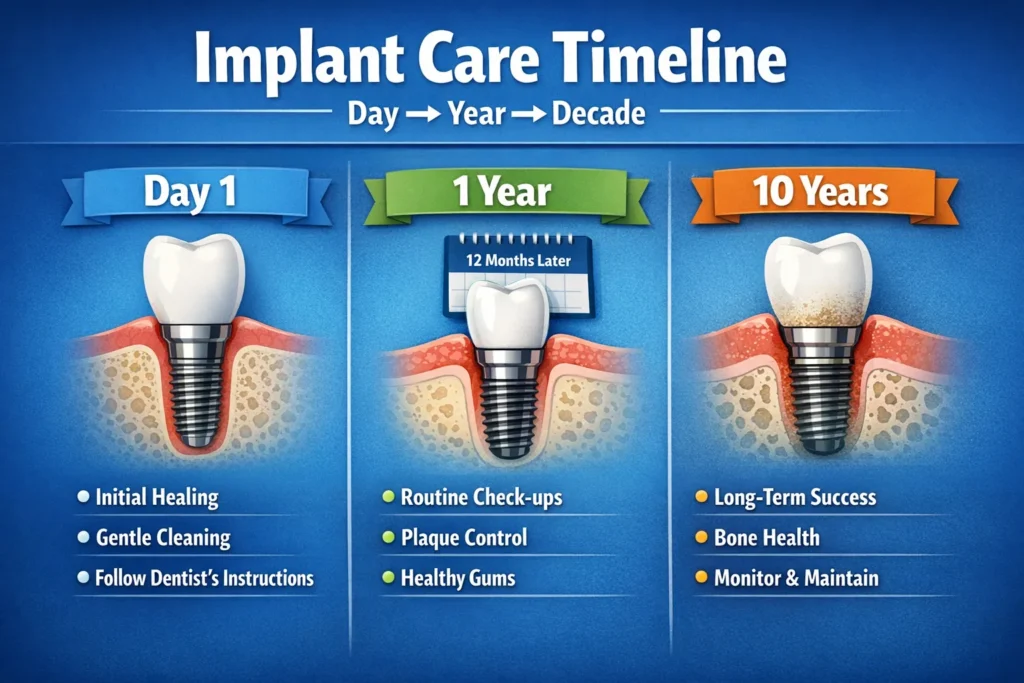
Visual Guide
Conclusion
Full mouth implants are one of the most advanced dental solutions available, but they demand respect.
The patients who succeed long-term don’t rely on motivation. They rely on systems.
Clear routines. The right tools. Professional oversight.
At Bay Central Dental, full mouth implant care isn’t treated as an afterthought, it’s part of a long-term partnership focused on stability, comfort, and confidence.
Pro Tips:
- Set a fixed brushing schedule (same time daily)
- Replace brushes every 3 months
- Never skip professional reviews
- Protect your bite at night
- Treat implants like an investment, because they are
Frequently Asked Questions
Do full mouth implants need special toothpaste?
Yes. Low-abrasive, non-whitening formulas reduce surface damage and inflammation risk.
Can implants fail even with good brushing?
Yes. Bite force, night grinding, and missed professional care are common causes.
Is a water flosser better than string floss?
For many full mouth cases, yes. especially under fixed bridges.
How long do full mouth implants last with proper care?
Clinical data shows 20+ years is common with structured daily care.
Do implants smell if not cleaned properly?
Yes. Trapped biofilm can cause odour even without decay.