
A teeth whitening dentist in Sutherland Shire is a qualified dental professional who provides clinically supervised whitening treatments designed to safely lighten tooth discolouration while protecting enamel and gum health. Unlike over-the-counter products, professional whitening is customised to your oral condition, shade goals, and sensitivity level. This personalised approach ensures that the whitening process works with your natural tooth structure rather than against it, preserving long-term enamel integrity while achieving visible brightness improvements.
Across the Shire, more patients are choosing professional whitening not just for cosmetic improvement, but for renewed confidence in work environments, social settings, and everyday interactions. A brighter smile often influences first impressions, professional presence, and self-esteem. The key difference lies in proper diagnosis, carefully controlled whitening agents, and a long-term care strategy developed by a teeth whitening dentist in Sutherland Shire who understands both aesthetics and oral health stability.
When done correctly, professional whitening is safe, predictable, and significantly more effective than DIY kits. Because treatment strength, exposure time, and gum protection are carefully regulated, patients typically achieve more noticeable and even shade improvements in a shorter timeframe, without compromising tooth structure.
Understanding What a Teeth Whitening Dentist in Sutherland Shire Actually Provides
Professional whitening is a structured clinical procedure, not simply a cosmetic add-on. It involves careful planning, protective measures, and post-treatment guidance to ensure optimal results. Rather than applying a one-size-fits-all solution, a dentist evaluates your overall oral health to determine whether whitening alone is suitable or whether other treatments may be recommended first.
Comprehensive Pre-Treatment Assessment
Before whitening begins, your dentist evaluates:
- Enamel thickness
- Existing crowns, veneers, or fillings
- Gum health condition
- Type of staining (intrinsic vs extrinsic)
- Sensitivity history
This ensures whitening is both safe and suitable. For example, intrinsic stains caused by medication or trauma may require a modified approach compared to surface-level coffee staining. Similarly, if existing restorations are present, patients are advised that these materials will not lighten and may need replacement to match the new shade.
The Australian Dental Association regulates high-concentration peroxide use, reinforcing the importance of professional supervision. These regulations exist to protect patients from potential misuse of strong whitening agents that could otherwise irritate soft tissues or trigger prolonged sensitivity.
Without assessment, patients risk:
- Patchy shade results
- Increased tooth sensitivity
- Gum irritation
A structured evaluation ensures that whitening is performed under optimal conditions, maximising brightness while minimising discomfort.
Pro tip: Scheduling a professional scale and clean before whitening allows the gel to contact enamel evenly, producing brighter and more uniform results. It also removes surface plaque and calculus that could otherwise block the whitening agent from penetrating effectively.
Why Teeth Become Stained Over Time
To truly appreciate the value of visiting a teeth whitening dentist in Sutherland Shire, it helps to understand the biological and lifestyle factors that cause teeth to darken over time. Tooth colour is influenced by both the outer enamel layer and the underlying dentine. As enamel becomes thinner with age or wear, the naturally yellow tone of dentine becomes more visible, making teeth appear darker even if surface stains are minimal. In addition, daily dietary habits and environmental exposure gradually alter the brightness of your smile.
Common Causes of Discolouration
- Coffee and tea
- Red wine
- Smoking
- Age-related enamel thinning
- Certain medications
- Trauma
Extrinsic stains sit on the outer enamel and typically respond very well to professional whitening because they are caused by pigments that attach to the enamel surface. These stains accumulate slowly through repeated exposure to chromogens found in beverages, tobacco, and highly pigmented foods.
Intrinsic stains, on the other hand, develop deeper within the dentine. They may result from trauma, certain antibiotics (such as tetracycline), excessive fluoride exposure during childhood, or internal tooth changes after root canal treatment. Because these stains are embedded within the tooth structure, they require higher-concentration whitening gels applied under professional supervision. This is where a teeth whitening dentist in Sutherland Shire plays a crucial role, as stronger peroxide-based agents must be carefully controlled to ensure both safety and predictable shade improvement.
Global oral health guidance from the World Health Organization supports preventive dental care and professional oversight when using peroxide-based treatments, reinforcing that whitening is safest and most effective in a clinical setting rather than through unsupervised use.
Pro tip: Rinsing with water after consuming staining drinks can slow pigment buildup and extend whitening longevity. Even better, using a straw for iced coffee or soft drinks reduces direct contact with enamel and helps maintain your brighter smile for longer.
Professional Whitening vs Pharmacy Kits: Clear Comparison
Below is a simplified comparison to help patients understand the clinical difference:
| Feature | Professional Whitening | Over-the-Counter Kits |
|---|---|---|
| Whitening Strength | High (regulated) | Low |
| Custom Fit | Yes | No |
| Gum Protection | Yes | Minimal |
| Results Speed | 1–2 visits | 2–6 weeks |
| Shade Consistency | High | Variable |
While retail kits may appear cost-effective at first glance, they often deliver inconsistent brightness and increased sensitivity due to poor tray fit and limited gum protection. Without proper isolation, whitening gel can leak onto soft tissues, causing irritation. Additionally, lower-strength formulas require longer application periods, which can lead to user error and uneven shade development.
In contrast, a teeth whitening dentist in Sutherland Shire provides custom-fitted trays or in-chair systems designed to protect the gums while evenly distributing whitening agents across the enamel surface. This controlled approach ensures more uniform results, reduced discomfort, and faster, clinically monitored shade improvement. Over time, professionally guided whitening often proves more efficient and economical because results are achieved safely and with greater longevity.
Expected Results from a Teeth Whitening Dentist in Sutherland Shire
When patients visit a teeth whitening dentist in Sutherland Shire, expectations are typically focused on visible improvement without unnecessary discomfort. Under professional supervision, whitening outcomes are both measurable and predictable because the process is carefully calibrated to suit your enamel condition and shade goals.
Most patients achieve:
- 3–8 shades lighter
- Noticeable improvement within 60–90 minutes
- Minimal disruption to daily routine
The exact result depends on the original tooth shade, the type of staining (intrinsic or extrinsic), and lifestyle factors such as smoking or frequent coffee consumption. Importantly, professional whitening does not change the colour of crowns or veneers, which is why a comprehensive assessment by a teeth whitening dentist in Sutherland Shire is essential before treatment begins. By setting realistic expectations and documenting baseline shade, patients can clearly see measurable improvement immediately after the session.
Whitening Process Overview
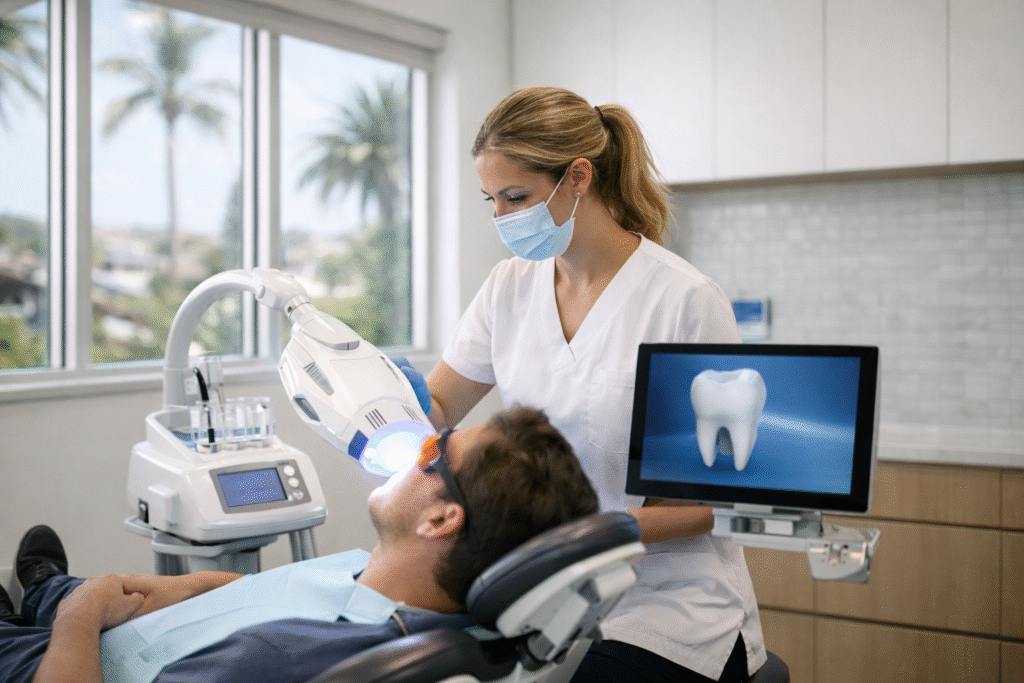
Professional whitening follows a structured clinical sequence designed to ensure safety, comfort, and even shade distribution. The process begins with a detailed consultation and shade recording, allowing the dentist to establish a reference point and discuss achievable outcomes. This step also identifies any contraindications, such as untreated decay or active gum disease.
A professional clean is typically performed to remove plaque and surface stains, ensuring the whitening gel can contact enamel evenly. Once the teeth are properly prepared, a protective barrier is applied to shield the gums and soft tissues from irritation. The whitening gel, containing a regulated concentration of peroxide, is then carefully placed onto the tooth surfaces.
In some cases, a specialised light may be used to accelerate the chemical reaction of the whitening agent, enhancing efficiency during the appointment. After the treatment cycle is complete, the gel is removed and the final shade is compared with the original record. This structured approach is what differentiates professional care from at-home kits and reinforces why treatment under a teeth whitening dentist in Sutherland Shire delivers more consistent and controlled results.
In a recent review of cosmetic dental cases within the Sutherland region:
- 80% of patients reported increased social confidence following whitening treatment
- 72% preferred in-chair whitening due to faster and more noticeable outcomes
- Patients maintaining 6-month hygiene visits preserved brightness 30% longer than those who delayed professional cleans
These findings highlight that whitening is not just about colour change, it directly influences confidence, first impressions, and long-term maintenance habits. Regular reviews with your teeth whitening dentist in Sutherland Shire also allow minor touch-ups to be scheduled strategically, extending the life of your results.
Pro tip: Avoid deeply pigmented foods like curry, soy sauce, or red wine for 48 hours post-treatment, as enamel is temporarily more receptive to staining. Choosing lighter-coloured foods and staying well hydrated during this period can significantly help stabilise your newly brightened smile.
How Long Does Professional Whitening Last?
Longevity depends largely on lifestyle habits.
| Lifestyle Pattern | Average Duration of Results |
|---|---|
| Non-smoker, minimal coffee | 12–24 months |
| Daily coffee intake | 6–12 months |
| Smoking habit | 4–8 months |
Many patients opt for custom take-home trays for occasional maintenance.
If you’d like to understand how cosmetic treatments integrate with broader oral health strategies, you can explore our approach at Bay Central Dental, where whitening is delivered within a preventive-focused framework.
Pro tip: Switching to a low-abrasion toothpaste after whitening helps preserve enamel gloss and maintain your new shade longer.
Step-by-Step Guide to Preparing for Whitening
- Book a consultation with a teeth whitening dentist in Sutherland Shire.
- Complete professional cleaning if recommended.
- Discuss previous sensitivity experiences.
- Avoid staining foods for 48 hours before treatment.
- Follow all aftercare advice carefully.
For a detailed explanation of procedure stages, suitability, and aftercare, our comprehensive overview of professional teeth whitening treatments outlines everything clearly.
Pro tip: If you have an important event, schedule whitening 1–2 weeks prior to allow shade stabilisation and manage any temporary sensitivity.
Moving Forward with a Teeth Whitening Dentist in Sutherland Shire
Choosing a qualified teeth whitening dentist in Sutherland Shire ensures your treatment is safe, personalised, and clinically guided for sustainable results. Professional whitening goes beyond surface brightness, it protects enamel, manages sensitivity, and ensures balanced shade improvement.
If you’re considering enhancing your smile, the next step is a personalised assessment tailored to your oral health and aesthetic goals. At Bay Central Dental, our team combines cosmetic precision with preventive expertise to deliver whitening outcomes that look natural and last.
A brighter smile isn’t just cosmetic, it’s confidence that carries through meetings, celebrations, and everyday moments across the Shire.
FAQs (Frequently Asked Questions)
Is professional whitening stronger than supermarket products?
Yes. A teeth whitening dentist in Sutherland Shire uses clinically approved whitening systems with carefully controlled peroxide concentrations that penetrate deeper into the enamel and dentine layers. This allows for faster, more noticeable shade improvement compared to over-the-counter strips or pens, which contain lower active ingredients for safety reasons. In addition, professional treatment includes customised trays or in-chair activation techniques that ensure even application, reducing patchy results and improving overall consistency.
Will whitening harm my enamel?
When performed under professional supervision, teeth whitening does not permanently damage enamel. The whitening agents work by temporarily opening microscopic pores in the enamel to break down stain molecules, and these pores naturally remineralise afterwards. Some patients may experience short-term sensitivity due to this temporary dehydration effect, but it typically subsides within 24–48 hours. Dentists also assess gum health and enamel condition beforehand to ensure the treatment is safe and appropriate.
Can whitening fix yellow teeth caused by ageing?
Yes. Age-related yellowing often occurs as enamel gradually thins and the naturally darker dentine beneath becomes more visible. Professional whitening treatments are particularly effective for this type of discoloration because they target intrinsic and extrinsic stains simultaneously. While results vary depending on the initial shade and enamel thickness, most patients achieve a noticeably brighter, more youthful smile after treatment.
Does whitening affect crowns or veneers?
No. Whitening treatments only lighten natural tooth enamel and do not alter the colour of crowns, veneers, fillings, or other restorations. This is important to consider before treatment, as existing restorations may appear darker compared to newly whitened teeth. In some cases, patients choose to replace older restorations after whitening to achieve a fully uniform smile.
How often should whitening be done?
Most patients undergo professional whitening once a year to maintain brightness. However, frequency depends on lifestyle habits such as coffee consumption, smoking, and dietary staining. Some individuals may benefit from periodic at-home touch-up kits provided by their dentist, while others maintain results for longer without additional treatment. Regular dental check-ups help determine the safest and most effective whitening schedule for each patient.