
TMJ stretching exercises are gentle, targeted movements designed to reduce jaw tension, improve mobility, and relieve discomfort associated with the temporomandibular joint (TMJ).
This joint connects your jaw to your skull and plays a crucial role in everyday actions like chewing, speaking, and yawning. When it becomes strained or misaligned, often due to stress, teeth grinding, or poor posture, it can lead to symptoms like jaw pain, clicking sounds, headaches, and limited movement.
For many people, especially those dealing with mild to moderate jaw tension, TMJ stretching exercises offer a simple, non-invasive way to support recovery and improve overall jaw function.
Why TMJ Stretching Exercises Are Gaining Attention
There’s a growing shift toward conservative, self-managed treatments for jaw discomfort.
TMJ stretching exercises are becoming more popular because they:
- Help relieve jaw stiffness and tightness
- Improve range of motion
- Support muscle relaxation
- Can be done at home without equipment
Many patients notice reduced tension and fewer symptoms when these exercises are performed consistently.
Pro Tip: Consistency is key, small daily exercises are often more effective than occasional intense effort.
Understanding the TMJ Stretching Process
One of the most common concerns is not knowing how to perform these exercises correctly. The key is slow, controlled movement without force.
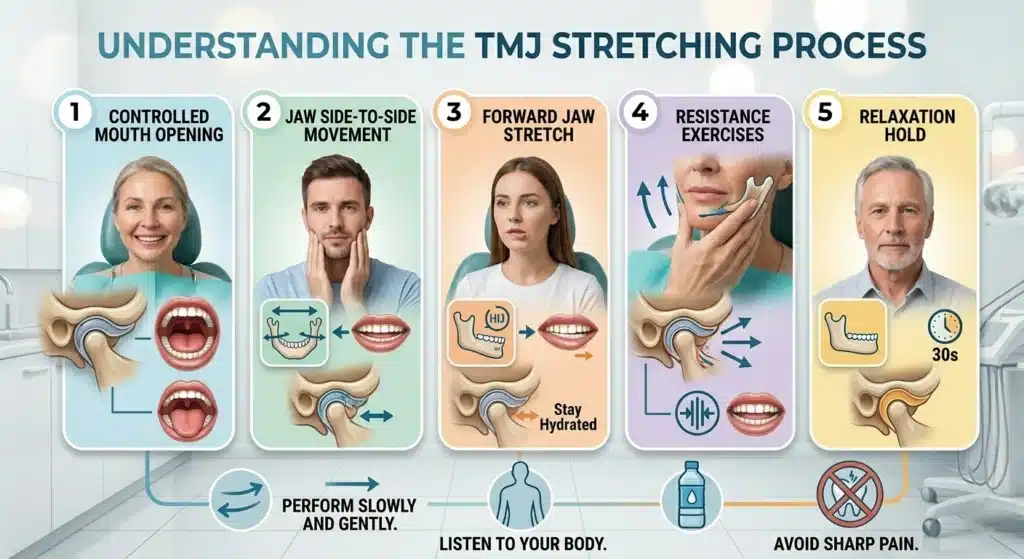
Basic TMJ Stretching Exercises
1. Controlled Mouth Opening
Slowly open your mouth while keeping your tongue resting on the roof of your mouth.
2. Jaw Side-to-Side Movement
Gently move your jaw from side to side within a comfortable range.
3. Forward Jaw Stretch
Move your lower jaw slightly forward and hold briefly.
4. Resistance Exercises
Use light pressure with your hand to guide controlled movement.
5. Relaxation Hold
Allow your jaw to rest in a neutral, relaxed position.
If you’d like to follow a guided routine, you can watch this practical demonstration of TMJ Exercises to ensure proper technique and pacing.
TMJ Exercises vs Other Treatment Options
TMJ issues can be managed in different ways depending on severity.
| Approach | Invasiveness | Best For |
|---|---|---|
| TMJ Stretching Exercises | None | Mild to moderate tension |
| Night Guards | Low | Teeth grinding (bruxism) |
| Physiotherapy | Low–Moderate | Muscle imbalance |
| Dental Treatment | Moderate | Structural issues |
TMJ stretching exercises are often the first step before considering more advanced interventions.
What Causes TMJ Pain and Jaw Tension?
Understanding the cause helps you manage symptoms more effectively.
Common Causes
- Teeth grinding (bruxism)
- Stress and jaw clenching
- Poor posture (especially desk work)
- Injury or trauma
- Misaligned bite
Common Symptoms
- Jaw pain or tightness
- Clicking or popping sounds
- Headaches or ear discomfort
- Difficulty opening or closing the mouth
TMJ stretching exercises target the muscles and movement patterns behind these symptoms.
Realistic Expectations: Results and Consistency
TMJ stretching exercises are effective, but they require patience and regular practice.
What to Expect
- Gradual reduction in tension
- Improved jaw mobility
- Fewer discomfort episodes over time
Tips for Best Results
- Perform exercises daily
- Avoid overextending the jaw
- Combine with stress management techniques
Think of these exercises like physiotherapy for your jaw, progress builds over time.
Who Should Try TMJ Stretching Exercises?
These exercises are suitable for most people experiencing mild jaw discomfort.
Ideal Candidates
- Individuals with jaw tightness or stiffness
- People who clench or grind their teeth
- Those experiencing occasional TMJ discomfort
When to Seek Professional Help
- Persistent or severe pain
- Jaw locking or inability to open fully
- Symptoms that worsen over time
In these cases, a dental or TMJ assessment may be necessary.
The Importance of Gentle, Natural Jaw Movement
Modern lifestyles, especially screen time and stress, can contribute to jaw tension.
That’s why there’s increasing focus on:
- Natural muscle relaxation
- Functional movement
- Preventive care
TMJ stretching exercises align with this approach by promoting balance, flexibility, and long-term jaw health.
Maintenance Routine: Supporting Long-Term Jaw Health
Keeping your jaw healthy involves simple daily habits.
Daily Routine
- Perform gentle TMJ exercises
- Avoid excessive chewing (gum, hard foods)
Lifestyle Adjustments
- Improve posture (especially at a desk)
- Manage stress levels
- Stay hydrated
Preventive Care
- Consider a night guard if grinding occurs
- Schedule regular dental check-ups
Pro Tip: Awareness of jaw tension throughout the day can help prevent flare-ups.
Conclusion: A Simple, Natural Approach to TMJ Stretching Exercises
TMJ stretching exercises offer a practical, non-invasive way to manage jaw discomfort and improve mobility. By focusing on gentle, controlled movements, they help restore balance to the muscles surrounding the jaw.
For many people, these exercises can be an effective first step toward relieving tension and improving everyday comfort, without the need for medication or complex treatments.
If your symptoms feel more persistent or complex, it may be worth exploring a more tailored approach. At Bay Central Dental, comprehensive care options are available for patients experiencing ongoing jaw issues, including advanced TMD Treatment (Temporomandibular Disorder) designed to address more complex conditions with a personalised plan.
FAQs (Frequently Asked Questions)
How often should I do TMJ stretching exercises?
Most people benefit from doing them once or twice daily, depending on comfort and severity of symptoms.
Can TMJ exercises make pain worse?
If done incorrectly or too aggressively, they can increase discomfort. Always perform them gently.
How long does it take to see results?
Some people notice improvements within a few days, while others may take a few weeks of consistent practice.
Are TMJ exercises safe for everyone?
They are generally safe for mild cases, but severe symptoms should be assessed by a professional.
Do TMJ exercises replace dental treatment?
No, they are a supportive approach and may be used alongside professional care if needed.