
Tooth reshaping with bonding is a conservative cosmetic dental procedure designed to subtly improve the shape, symmetry, and appearance of your teeth using tooth-coloured composite resin. Rather than removing significant enamel or placing laboratory-made restorations, this technique enhances your natural tooth structure in a single visit. By focusing on refinement rather than reconstruction, Tooth reshaping with bonding offers a practical solution for patients who want visible improvements without committing to irreversible or aggressive treatments.
Across Australia, more patients are opting for minimally invasive cosmetic dentistry that preserves healthy enamel. At Bay Central Dental, we focus on precision-driven treatments that balance aesthetics with long-term oral health. If you’re after a refined, natural-looking smile without extensive drilling, Tooth reshaping with bonding may be the ideal solution. It is especially suitable for correcting minor chips, uneven edges, slight gaps, or teeth that appear slightly misshapen, delivering noticeable enhancement while maintaining the integrity of your natural smile.
What Exactly Is Tooth Reshaping with Bonding?
Tooth reshaping with bonding combines two techniques:
- Enamel contouring – Gentle smoothing or reshaping of uneven edges
This step involves carefully refining small imperfections in the enamel to create smoother, more symmetrical contours. By selectively polishing or subtly reshaping specific areas, the dentist can improve balance and proportion without compromising tooth strength. Enamel contouring plays a crucial role in Tooth reshaping with bonding because even minimal adjustments can dramatically enhance overall smile harmony.
- Composite bonding – Application of tooth-coloured resin to enhance tooth shape
After contouring, a high-quality composite resin is artistically applied to the tooth surface. The material is colour-matched to blend seamlessly with your natural enamel, allowing the dentist to build up edges, close tiny gaps, or reshape corners for improved aesthetics. This layering technique gives Tooth reshaping with bonding its versatility, as the resin can be sculpted with precision before being hardened and polished to a smooth, natural-looking finish.
Unlike porcelain veneers or crowns, Tooth reshaping with bonding typically requires minimal or no anaesthetic and preserves natural tooth structure. Because the procedure involves little to no drilling, most patients experience very little discomfort and can return to normal activities immediately after treatment. Maintaining as much healthy enamel as possible also supports long-term dental health, reducing the need for more invasive interventions later on.
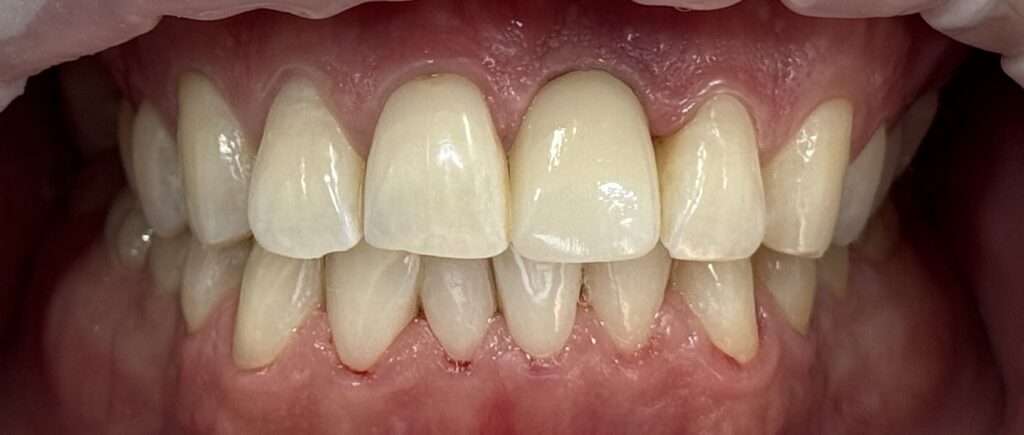
Another major advantage is that the treatment is usually completed in one appointment and is more cost-effective compared to indirect restorations. Since there is no need for laboratory fabrication, adjustments can be made chairside, allowing you to see results immediately. The composite resin is layered and sculpted directly onto the tooth, hardened with a curing light, and polished for a seamless finish.
Pro tip: Subtle refinements usually look more natural than dramatic changes. Small contour adjustments can significantly improve smile harmony without making it obvious you’ve had treatment.
Who Is a Good Candidate for Tooth Reshaping with Bonding?
This treatment is ideal for:
- Small chips or minor cracks
- Slightly uneven edges
- Small gaps between teeth
- Worn or shortened teeth
- Mild asymmetry
Patients who present with these minor cosmetic concerns often benefit most from Tooth reshaping with bonding because the procedure is specifically designed for subtle refinements rather than dramatic reconstruction. Small chips or minor cracks can be carefully rebuilt with composite resin, restoring a smooth outline without removing additional healthy enamel. Slightly uneven edges can be reshaped to create better symmetry, while small gaps between teeth may be gently closed to improve visual balance. For worn or shortened teeth, bonding can restore natural proportions, and in cases of mild asymmetry, the technique allows precise contour adjustments that enhance overall harmony while keeping the smile looking authentic.
However, it may not suit:
- Large structural damage
- Severe bite issues
- Extensive decay
- Major spacing concerns
In situations involving significant structural damage, functional bite problems, advanced decay, or large spacing discrepancies, more comprehensive restorative or orthodontic treatments may be required. Tooth reshaping with bonding works best when the underlying tooth structure is healthy and stable, as it is primarily a cosmetic enhancement rather than a full structural solution. A thorough dental assessment is essential to determine whether conservative bonding will achieve the desired outcome or whether alternative treatments would provide a more predictable, long-term result.
If you’re unsure whether this treatment fits your goals, you can explore the suitability of bonding for cosmetics to better understand when composite solutions are most effective.
Why More Australians Are Choosing Tooth Reshaping with Bonding
According to insights from the Australian Dental Association, patients increasingly prefer conservative cosmetic procedures that protect natural tooth structure. Minimally invasive dentistry aligns with modern evidence-based practice and long-term oral health preservation.
At Bay Central Dental, we’ve observed:
- High demand for single-visit cosmetic improvements
- Increased preference for reversible treatments
- Strong patient satisfaction for subtle smile enhancements
Tooth reshaping with bonding appeals to patients because it offers:
- Immediate aesthetic improvement
- Lower cost compared to porcelain veneers
- No laboratory wait times
- Minimal recovery period
- Preservation of enamel
How Tooth Reshaping with Bonding Is Performed: A Step-by-Step Clinical Overview
Understanding how the procedure works can help you feel more confident about choosing this conservative cosmetic option. Although the process is straightforward, each stage is carefully planned and executed to ensure that Tooth reshaping with bonding delivers natural-looking, long-lasting results while preserving as much healthy enamel as possible.
Comprehensive Assessment
The appointment begins with a detailed clinical evaluation. Your dentist examines the tooth structure, gum condition, and bite alignment to confirm that bonding is suitable for your case. This step is essential because even minor cosmetic refinements must be supported by healthy foundations. By assessing how your teeth come together when you bite, the dentist ensures the bonded area will not be exposed to excessive pressure that could compromise durability.
Precise Shade Matching
Before any material is applied, the composite resin is carefully selected to match the colour and translucency of your surrounding teeth. Natural enamel is not a single flat shade, so this step requires attention to subtle variations in tone. Accurate shade matching ensures the final result blends seamlessly, making the enhancement virtually undetectable.
Gentle Surface Preparation
To help the resin adhere securely, the tooth surface is lightly conditioned. This involves minimal preparation, typically no drilling or only very slight enamel adjustment. The goal is to create a micro-textured surface that strengthens the bond while preserving the natural tooth structure, which is one of the main advantages of this treatment.
Artistic Sculpting and Contouring
Once the surface is ready, the composite resin is applied in layers and carefully sculpted into the desired shape. This is where clinical skill meets artistry. The dentist refines edges, smooths transitions, and enhances proportions so the treated tooth aligns harmoniously with the rest of your smile. Small adjustments at this stage can make a significant difference in overall balance.
Curing and Final Polishing
After shaping is complete, a specialised curing light hardens the material within seconds. The tooth is then polished to achieve a smooth, glossy finish that mimics the natural sheen of enamel. This final refinement not only enhances aesthetics but also improves comfort and stain resistance.
Most treatments take between 30 and 90 minutes per tooth, making it a convenient option for patients seeking noticeable improvement in just one visit.
Pro tip: If you grind your teeth at night, discuss a custom night guard beforehand. Bruxism can reduce the longevity of bonding, but preventive planning significantly improves durability.
Tooth Reshaping with Bonding vs Other Cosmetic Options
Before deciding on any cosmetic dental procedure, it is important to understand how different treatment options compare in terms of invasiveness, cost, durability, and suitability. While many patients initially consider veneers or crowns, they are often surprised to learn that Tooth reshaping with bonding can achieve meaningful aesthetic improvements with far less alteration to the natural tooth. The table below outlines the key differences to help clarify which option may best align with your goals and clinical needs.
| Feature | Tooth Reshaping with Bonding | Porcelain Veneers | Dental Crowns |
|---|---|---|---|
| Enamel Removal | Minimal | Moderate | Significant |
| Cost | Lower | Higher | Higher |
| Visits Required | 1 | 2–3 | 2+ |
| Reversibility | Often | No | No |
| Ideal For | Minor flaws | Moderate changes | Structural repair |
As shown above, the most significant distinction lies in how much natural enamel must be removed. Tooth reshaping with bonding requires minimal alteration, making it a more conservative choice for correcting small chips, uneven edges, or minor gaps. In contrast, porcelain veneers involve moderate enamel reduction to allow proper placement, while dental crowns require substantial reshaping of the entire tooth to accommodate full coverage.
Cost and appointment time are also important considerations. Bonding is typically completed in a single visit and is more budget-friendly because it does not require laboratory fabrication. Veneers and crowns, however, usually involve multiple appointments and higher laboratory costs. Additionally, bonding is often reversible or easily adjustable, whereas veneers and crowns are permanent restorations.
If you’re considering a slightly more comprehensive cosmetic enhancement, our composite veneers and bonding service may provide additional smile refinement while maintaining a conservative approach.
How Long Does Tooth Reshaping with Bonding Last?
On average, tooth reshaping with bonding lasts 3–7 years, depending on:
- Oral hygiene habits
- Bite force
- Diet
- Regular dental check-ups
Composite resin can stain slightly over time, especially with frequent coffee or red wine consumption. However, professional polishing during routine cleans often restores shine.
Pro tip: Whitening your natural teeth before bonding ensures colour matching remains consistent long-term, as bonded material does not respond to whitening treatments later.
Conclusion Is Tooth Reshaping with Bonding Right for You?
Tooth reshaping with bonding is a remarkably effective solution for minor cosmetic imperfections. It’s fast, minimally invasive, and designed to enhance your natural smile rather than replace it.
If you’re ready to explore how tooth reshaping with bonding can refine your smile with precision and care, our experienced team At Bay Central Dental is here to guide you through a personalised consultation.
Book your appointment today and discover how a subtle adjustment can make a powerful difference to your confidence and oral health.
FAQs (Frequently Asked Questions)
Is tooth reshaping with bonding painful?
Tooth reshaping with bonding is generally not painful because it is a minimally invasive procedure that mainly involves the outer enamel layer, which does not contain nerves. Most patients experience little to no discomfort, and local anaesthetic is rarely needed. Some mild sensitivity to hot or cold foods may occur shortly after treatment, but this typically subsides within a few days as the tooth adjusts.
How much does tooth reshaping with bonding cost in Australia?
The cost of tooth reshaping with bonding in Australia varies depending on the number of teeth treated, the complexity of the reshaping, and the dental clinic’s location and expertise. However, it is usually more affordable than porcelain veneers because it requires less preparation, fewer materials, and often only one appointment, making it a cost-effective option for minor cosmetic improvements.
Will bonded teeth look natural?
Yes, bonded teeth can look very natural when performed by an experienced dentist, as modern composite resins are designed to closely match the colour, translucency, and texture of natural enamel. The material is carefully shaped and polished to blend seamlessly with surrounding teeth, resulting in an aesthetic enhancement that is often indistinguishable from untreated enamel.
Can tooth reshaping with bonding fix gaps?
Tooth reshaping with bonding can effectively close small gaps by adding composite resin to the sides of teeth to create a fuller appearance and reduce spacing. However, for larger gaps or spacing caused by alignment issues, orthodontic treatment may be recommended instead, with bonding sometimes used afterward to refine the final cosmetic result.
Is the procedure reversible?
In many cases, the procedure is considered reversible, especially when only minimal enamel reshaping is involved, because the bonded composite material can often be removed without significantly altering the natural tooth structure. If more extensive enamel contouring is required, however, full reversibility may not be possible, so it is important to discuss this with your dentist beforehand.
Can I eat normally afterwards?
Yes, you can usually eat normally immediately after the procedure since the bonding material hardens instantly under a special curing light. However, it is advisable to avoid very hard or sticky foods during the first 24 hours to reduce the risk of chipping and to help ensure the bonded area remains strong and durable.