
Veneers for crooked teeth are a cosmetic dentistry solution designed to improve the appearance of mildly misaligned, uneven, or rotated teeth without the need for long-term orthodontic treatment. Rather than physically moving teeth like braces or aligners, veneers visually straighten the smile by reshaping and realigning the visible surfaces of the teeth. This approach focuses on how the teeth look when you smile, making it an attractive option for patients who are more concerned with aesthetics than structural tooth movement.
For many Australians, the appeal lies in speed, predictability, and aesthetics, especially when crooked teeth are mild and primarily a cosmetic concern. Treatment with veneers often requires only a few appointments, delivering immediate and noticeable results without months or years of orthodontic adjustments. This makes veneers particularly appealing for adults seeking a confident smile for professional or social reasons.
What Are Veneers For Crooked Teeth?
Veneers are thin, custom-made shells, typically porcelain, bonded to the front of teeth to enhance their shape, size, and alignment. When used for crooked teeth, veneers create the illusion of straightness by correcting uneven edges, rotations, and spacing. Each veneer is carefully designed to complement surrounding teeth, ensuring the final result looks natural rather than artificial.
They are most suitable for:
- Mild crowding
- Slightly rotated teeth
- Uneven tooth lengths
- Small gaps combined with misalignment
Because veneers do not reposition the teeth themselves, they work best when bite function is healthy and misalignment is limited to the visible front teeth. In these cases, veneers for crooked teeth can offer a balanced, symmetrical smile without altering the underlying tooth structure extensively.
Unlike orthodontics, veneers focus on appearance rather than tooth movement. This distinction is important, as veneers are not intended to correct complex alignment issues or jaw-related problems, but rather to enhance the visual harmony of the smile.
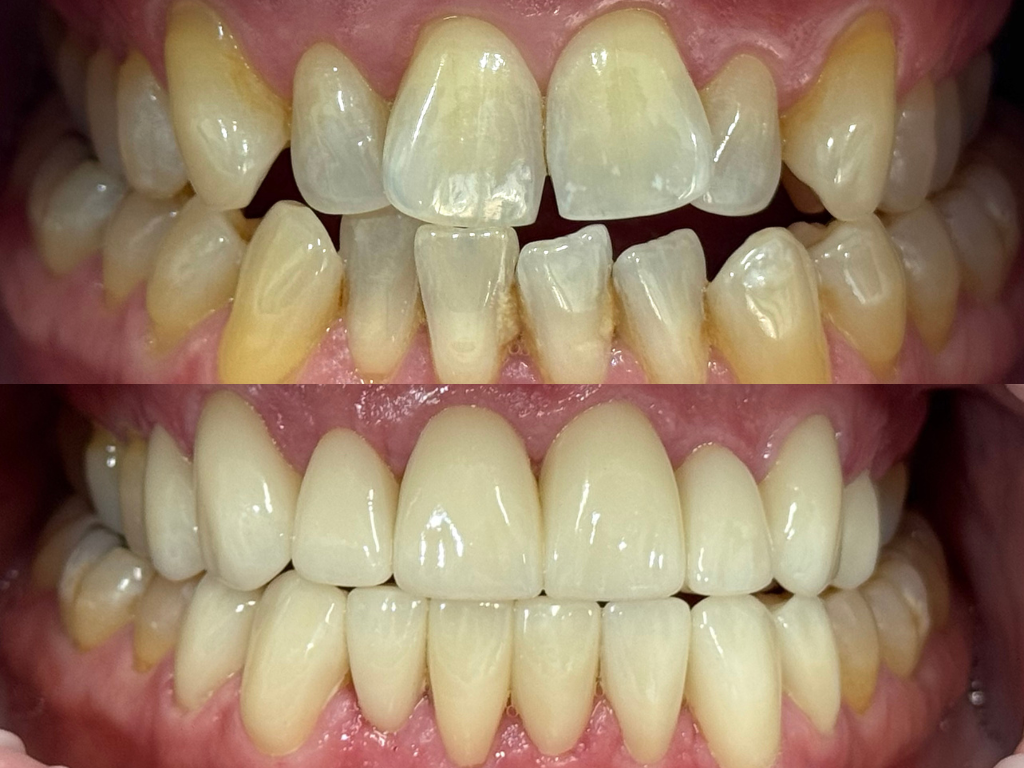
How Veneers Visually Straighten Crooked Teeth
Instead of shifting tooth roots, veneers adjust:
- Tooth width and proportions
- Visible alignment of front surfaces
- Symmetry across the smile line
By subtly altering the shape and contour of each tooth, veneers can mask minor rotations or overlaps, making teeth appear straighter when viewed from the front. Dentists also use precise placement and shading techniques so the veneers blend seamlessly with natural teeth, reinforcing the illusion of alignment. As a result, veneers for crooked teeth can dramatically improve smile aesthetics while preserving comfort and functionality.
Veneers vs Braces vs Clear Aligners
When comparing cosmetic and orthodontic options, it’s important to understand that each treatment addresses different needs. Veneers focus on visual alignment, making them ideal for patients whose concerns are mainly aesthetic rather than functional. In contrast, braces and clear aligners physically move teeth and roots into new positions, which is essential for correcting bite problems, overcrowding, or jaw discrepancies.
Veneers typically require only two to three visits, offering immediate improvement in smile appearance. Braces, while highly effective for complex cases, involve a much longer commitment and visible hardware. Clear aligners sit between the two, less noticeable than braces and suitable for mild to moderate alignment issues, but still requiring months of consistent wear. For patients prioritising speed and cosmetic refinement, veneers for crooked teeth can be an appealing alternative when orthodontic correction is not medically necessary.
| Treatment | What it fixes | Timeframe | Best for |
|---|---|---|---|
| Veneers | Visual alignment | 2–3 visits | Mild crooked teeth |
| Braces | Structural alignment | 12–24 months | Moderate–severe cases |
| Clear aligners | Structural alignment | 6–18 months | Mild–moderate cases |
Pro tip: If bite issues or jaw alignment are involved, orthodontics may still be necessary. Veneers are not designed to correct functional problems, and a professional assessment is essential before choosing a cosmetic-only approach.
Who Is Suitable For Veneers For Crooked Teeth?
You may be a good candidate if you have mild to moderate cosmetic misalignment and are looking for a fast, predictable transformation without the long-term commitment of braces or aligners. Candidates should also have healthy gums, sufficient enamel, and realistic expectations about what veneers can and cannot achieve.
Another key factor is lifestyle preference. Many patients choose veneers for crooked teeth because they are fixed in place and require minimal daily maintenance compared to removable aligners. However, suitability is always determined on an individual basis through a comprehensive dental evaluation.
You may be a good candidate if you:
- Have mild or moderate cosmetic misalignment
- Want fast results
- Have healthy gums and enamel
- Prefer a fixed, low-maintenance option
Patients often begin by understanding a clinic’s overall cosmetic philosophy and experience at Bay Central Dental, where aesthetic treatments are planned conservatively and tailored to long-term oral health. This approach ensures that cosmetic improvements support, rather than compromise, the strength and function of the natural teeth.
When Veneers Are NOT Recommended
Veneers may not be suitable if:
- Teeth are severely crowded
- There are major bite or jaw issues
- Significant enamel loss is present
- Teeth grinding is unmanaged
In these situations, veneers alone may not provide a stable or long-lasting solution. Because veneers are primarily a cosmetic treatment, underlying structural or functional problems can place excessive stress on restorations or compromise bonding strength. For patients considering veneers for crooked teeth, addressing orthodontic or preventive concerns first often leads to safer, more predictable cosmetic outcomes. In such cases, orthodontic treatment may be recommended before cosmetic enhancement.
Types Of Veneers Used For Crooked Teeth
Different veneer materials offer varying levels of durability, precision, and aesthetic refinement. The choice depends on the degree of misalignment, enamel condition, and long-term expectations.
Porcelain Veneers (most common)
Porcelain veneers are preferred for their:
- Strength and durability
- Natural translucency
- Precise shaping capabilities
Their ability to mimic natural enamel makes them particularly effective for achieving visual alignment and balanced proportions in mild cases of crooked teeth. As a result, they are commonly selected for veneers for crooked teeth when longevity and premium aesthetics are priorities.
Composite Veneers
Composite veneers may be considered for:
- Minor corrections
- Budget-conscious patients
- Short-term cosmetic goals
While composite veneers can deliver noticeable improvement, they typically offer less precision and durability compared to porcelain options.
| Feature | Porcelain | Composite |
|---|---|---|
| Longevity | 10–15+ years | 5–7 years |
| Precision | High | Moderate |
| Aesthetic result | Premium | Good |
Patients exploring long-term cosmetic correction often review detailed information about porcelain veneers to understand how they perform in cases of mild misalignment and whether they align with both aesthetic goals and oral health considerations.
Step-by-step: How Veneers For Crooked Teeth Are Placed
Smile Assessment & Planning
The process begins with a comprehensive smile assessment to determine whether veneers are the right solution for the patient’s specific type of misalignment. Dentists evaluate tooth position, spacing, bite relationship, and facial symmetry to ensure the final result looks balanced and natural. Digital scans, high-resolution photographs, and bite analysis allow precise planning and help identify whether veneers for crooked teeth can achieve the desired visual alignment without compromising function.
This planning stage is crucial, as it sets realistic expectations and ensures that cosmetic changes work in harmony with jaw movement and surrounding teeth. In many cases, mock-ups or digital smile previews are used so patients can visualise how subtle reshaping may improve the appearance of crooked teeth before treatment begins.
Conservative tooth preparation
Once the treatment plan is finalised, conservative tooth preparation is performed. This step involves minimal enamel reshaping to create space for the veneers while preserving as much natural tooth structure as possible. The goal is not to straighten teeth physically, but to create a uniform surface that allows veneers to mask minor rotations, uneven edges, or crowding.
For veneers for crooked teeth, conservative preparation is especially important to avoid a bulky appearance. Skilled dentists carefully adjust tooth contours to enhance symmetry while maintaining strength and long-term oral health.
Custom Veneer Design
After preparation, custom veneers are designed based on the patient’s smile plan. Dental technicians craft each veneer to balance tooth alignment, proportions, and facial features. Factors such as tooth length, width, translucency, and shade are carefully considered to ensure the veneers blend seamlessly with natural teeth.
This step is where cosmetic precision plays a major role. Well-designed veneers can subtly correct visual misalignment, making teeth appear straighter without altering their underlying position. For many patients, this tailored approach is what makes veneers for crooked teeth a highly effective cosmetic solution.
Bonding & Refinement
The final step involves permanently bonding the veneers to the teeth using advanced dental adhesives. Each veneer is positioned with precision, then secured and polished to achieve a smooth, natural finish. Dentists make fine adjustments to ensure proper bite contact and comfortable function.
Refinement is an essential part of this stage, as even small adjustments can enhance comfort, durability, and aesthetics. Once completed, the smile appears straighter, more balanced, and harmonious, often with immediate results.
Most treatments are completed within two to three appointments, making veneers an efficient option for patients seeking fast cosmetic improvement.
Real-World Insight: Australian Cosmetic Dentistry Trends
Recent data from Australian dental clinics shows:
- Over 55% of veneer patients seek treatment for alignment-related concerns
- Adults aged 25–45 are the fastest-growing demographic
- Demand increases among patients who prefer non-orthodontic solutions
Professional organisations such as the Australian Dental Association support veneers as an ethical cosmetic option when case selection and conservative preparation are prioritised.
How Veneers For Crooked Teeth Compare To Other Cosmetic Concerns
Crooked teeth often occur alongside other aesthetic issues such as staining, uneven colour, or worn enamel. Rather than addressing these concerns separately, many patients choose a combined cosmetic approach. Veneers can simultaneously improve alignment appearance and enhance tooth colour, shape, and surface consistency.
In fact, patients frequently explore veneers for crooked teeth alongside options for discolouration, especially when learning about solutions like veneers for stained teeth. By integrating multiple cosmetic improvements into a single treatment plan, veneers offer a comprehensive smile makeover that delivers both visual straightening and colour enhancement in a cohesive, long-lasting result.
Why Experience Matters With Cosmetic Alignment
Using veneers to correct crooked teeth requires:
- Advanced smile design skills
- Understanding of bite dynamics
- Conservative enamel management
Cosmetic alignment with veneers is a highly technical process that goes beyond aesthetics alone. Because veneers do not physically move teeth, dentists must carefully plan proportions, contours, and contact points to create the illusion of straightness while maintaining comfortable function. This level of precision is especially important when using veneers for crooked teeth, where small design errors can affect both appearance and bite balance.
Dentists with expertise in cosmetic and restorative dentistry consistently achieve more natural, balanced results, especially when alignment correction is involved. Their experience allows them to anticipate long-term wear patterns, preserve enamel, and design veneers that integrate seamlessly with the patient’s facial features and natural smile dynamics.
Conclusion: Choosing Veneers For Crooked Teeth With Confidence
Veneers for crooked teeth offer a fast, predictable cosmetic solution for patients with mild misalignment who want immediate improvement without braces. Rather than undergoing lengthy orthodontic treatment, patients can achieve a straighter-looking smile through carefully planned cosmetic enhancement that focuses on symmetry, proportion, and natural aesthetics.
When thoughtfully designed and placed by experienced professionals, veneers enhance not only the appearance of alignment but also overall smile harmony and confidence. The key lies in proper assessment, conservative preparation, and an ethical approach that prioritises long-term oral health.
If you’re considering cosmetic alignment and want a tailored, Australian-standard approach, begin your journey with Bay Central Dental, where porcelain veneers and smile design are delivered with precision, ethics, and long-term oral health in mind.
Your straighter, more confident smile starts with the right advice, and the right team.
FAQs (Frequently Asked Questions)
Do veneers actually straighten teeth?
Veneers don’t move teeth physically, but they make teeth appear straight.
Are veneers faster than braces?
Yes. Veneers typically take weeks, not months or years.
Can veneers fix severe crooked teeth?
No. Severe misalignment usually requires orthodontic treatment.
Will veneers affect my bite?
When planned properly, veneers maintain a healthy bite.
How long do veneers last?
Porcelain veneers often last 10–15 years or more with good care.